
A street-sweeping truck passing through a neighborhood is not the same as a clean street. Residents should be able to see what their money bought at the curb, around the storm drain, and on the blocks that do not have someone calling a politician.
Evansville earmarked $650,000 for street sweeping in its 2023 budget, up from $600,000 in 2022. That spending deserves more than a truck sighting and an assumption that the job was done. We want a schedule residents can use, a coverage record they can check, and inspections that measure the result.
What residents are promised
EWSU’s published street-sweeping schedule calls for weekly service in the downtown business district, monthly service on primary streets, and residential sweeping twice a year, in spring and fall. The utility says signs are posted at least a day before sweeping.
The difference in frequency is substantial. Neighborhood streets collect leaves, dirt, and other debris between visits. Twice-yearly service needs to do a thorough job when it arrives, and the city should examine whether that frequency is enough where deposits repeatedly build up.
What we saw in the Presidents neighborhood
On May 12, 2023, we recorded nearly an hour of drone footage of a Republic Services sweeper in the Presidents neighborhood. The observation covered Harlan, Henning, Marshall, and Lodge avenues between Taylor and Covert avenues.
The recurring concern was curb coverage. In several places, the truck passed without the side broom reaching the material at the edge. Some heavy deposits were only partly disturbed. A trail of debris left by one pass prompted a return, while other material remained.
The curb is where the work matters
At Marshall and Madison avenues, accumulated material formed a substantial deposit near the curb and drain approach. On Marshall Avenue, vegetation was growing in debris at a storm-drain inlet. These are the places where a maintenance program should have a clear answer for material a routine pass cannot remove.
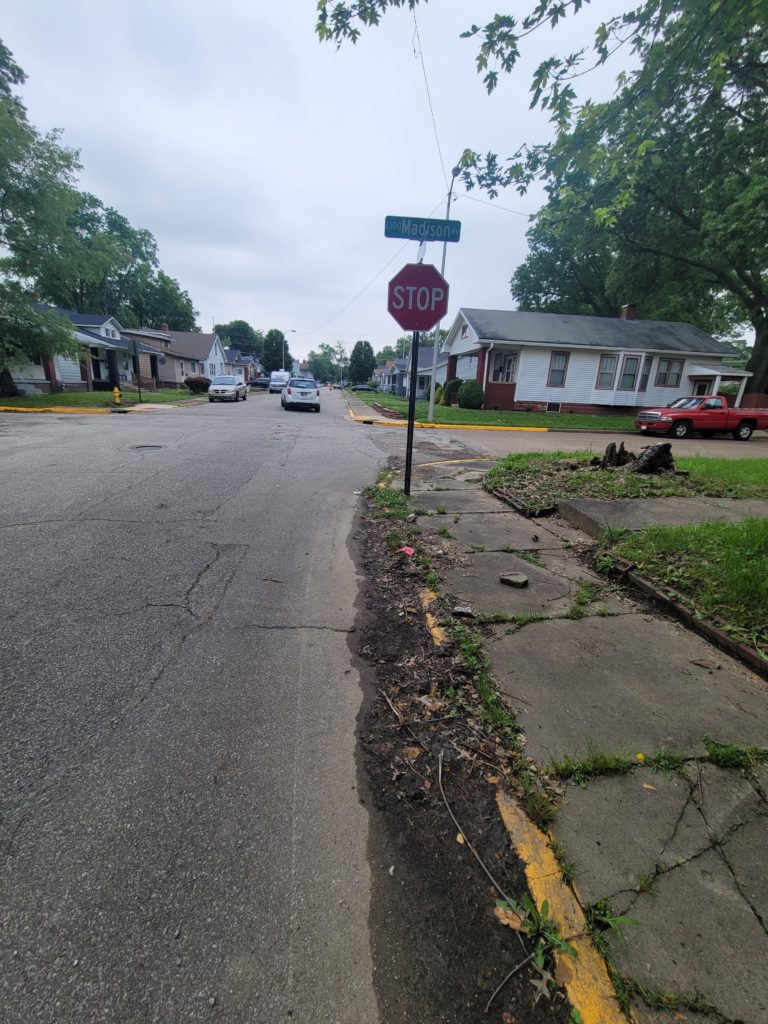
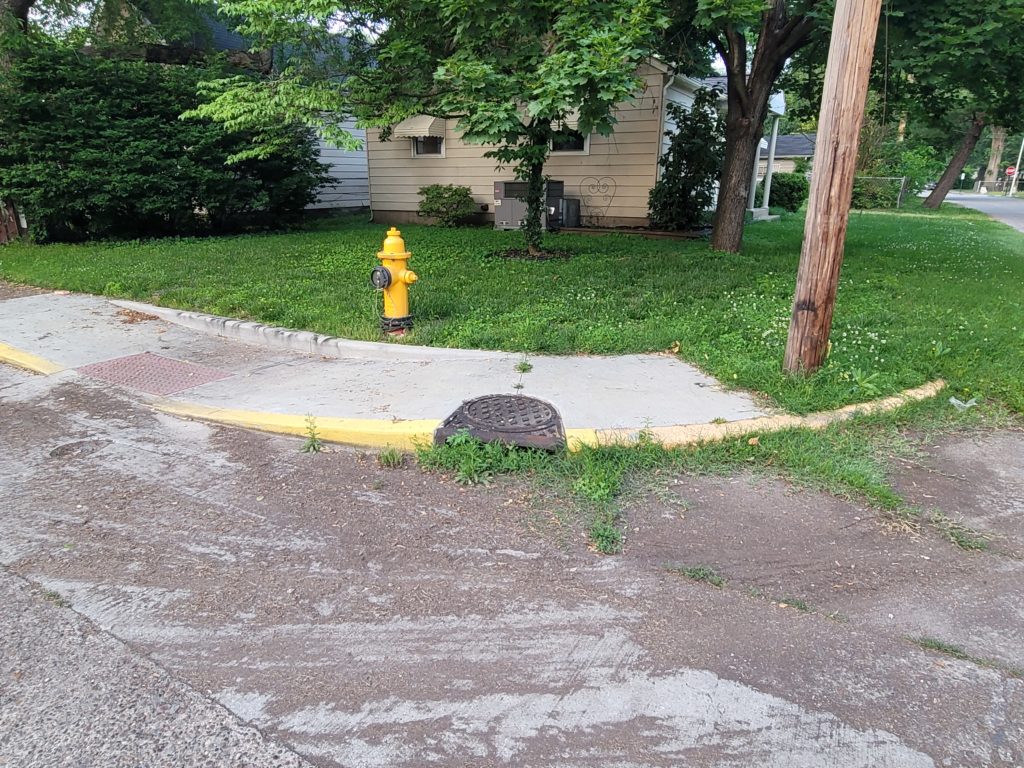
A Wisconsin study of street-sweeping effectiveness examines curb deposits and their relationship to runoff pollution. For Evansville, the practical question is straightforward: when the material has built up beyond what a normal sweeping pass can handle, who comes back with the tools to remove it?
Debris around an inlet is a maintenance problem worth addressing. Establishing the causes of flooding on a particular block also requires drainage and sewer records. Sweeping and drain maintenance should be coordinated, with each crew’s responsibility clear.
Show us the completed route
Watching the truck change direction and revisit streets raises a question a public record should answer: which curb sections were actually cleaned? Residents should not have to reconstruct the route from a drone video.
Publish a map of completed streets, the date of service, missed sections, and return visits. If a parked vehicle, heavy deposit, equipment problem, or other obstruction prevents a proper pass, record it and explain the next step. A complaint should not be the only way a missed section gets attention.
One day’s notice is a thin plan
Temporary signs are the main cue residents see. Signs photographed near Weinbach and Taylor avenues in 2022 were small and could be easy to miss. Signs left in place after service created another problem: residents could not reliably tell which date they applied to.
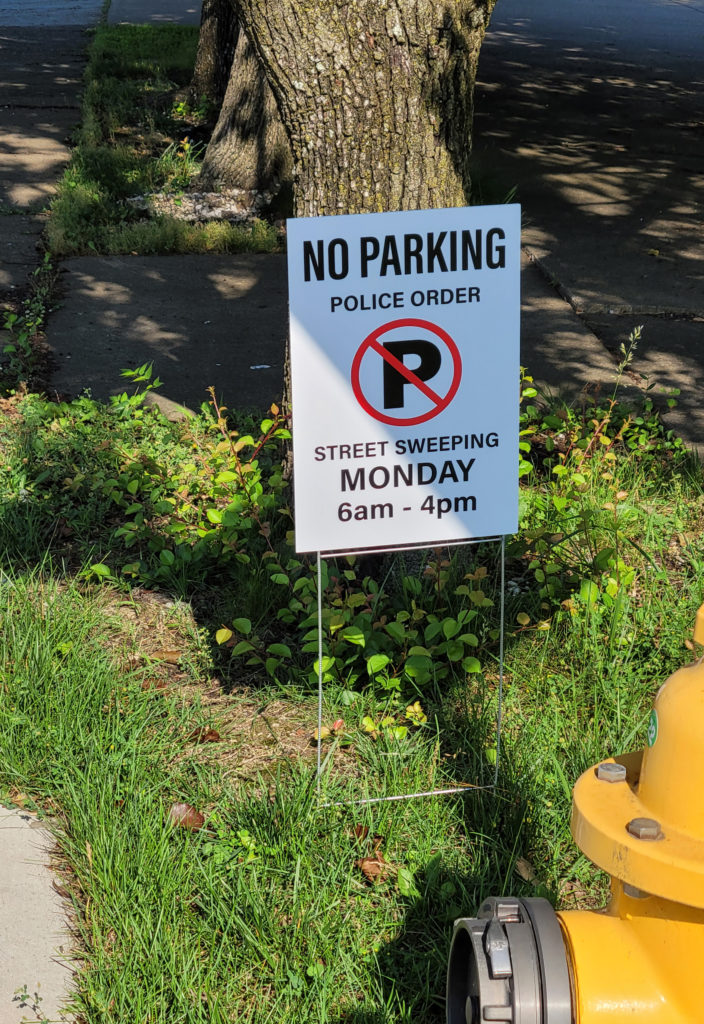
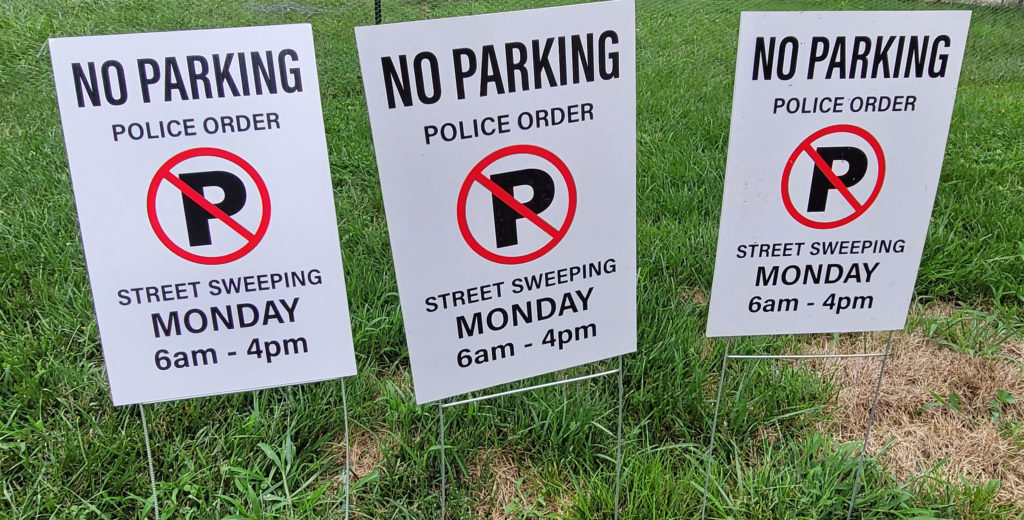
Post a calendar with actual dates, place signs consistently where people can see them, and communicate changes. Give residents enough time to make arrangements for their vehicles. A “POLICE ORDER” on a small sign does not make short notice practical.
Volunteers should complement a dependable service
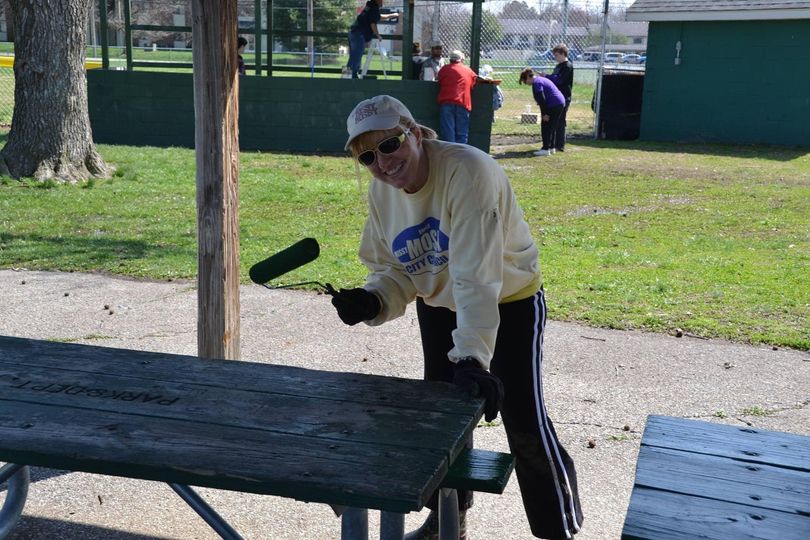
Residents who help clear debris and clean their neighborhoods deserve appreciation. Their effort should complement a dependable maintenance program, with clear responsibility for streets and drains. A basic service should not depend on whether a block has an especially persistent volunteer.
What should change
- Publish neighborhood dates and a completed-route map.
- Inspect cleaned curbs and drain approaches, and document corrective work.
- Use appropriate equipment or a supplemental crew for heavy deposits the sweeper leaves behind.
- Review whether twice-yearly residential sweeping matches the actual buildup of debris.
- Compare contractor and city-operated options using costs, curb miles cleaned, debris removed, and inspection results.
- Make training, equipment maintenance, and performance standards part of the accountability record.
We want answers about the work: how many curb miles were cleaned, how much material was removed, who inspected it, and what happened where the result fell short. The city should be able to provide those answers without waiting for a neighborhood to make noise.
A resweep may fix one complaint. A schedule, measurable standards, and inspections can improve the service for every neighborhood. That is the change we are asking for.
Send a service record, photograph, response, or correction. For sweeping questions, EWSU directs residents to the contact information on its street-sweeping page.